Designing
with
Foliage
Keep it simple
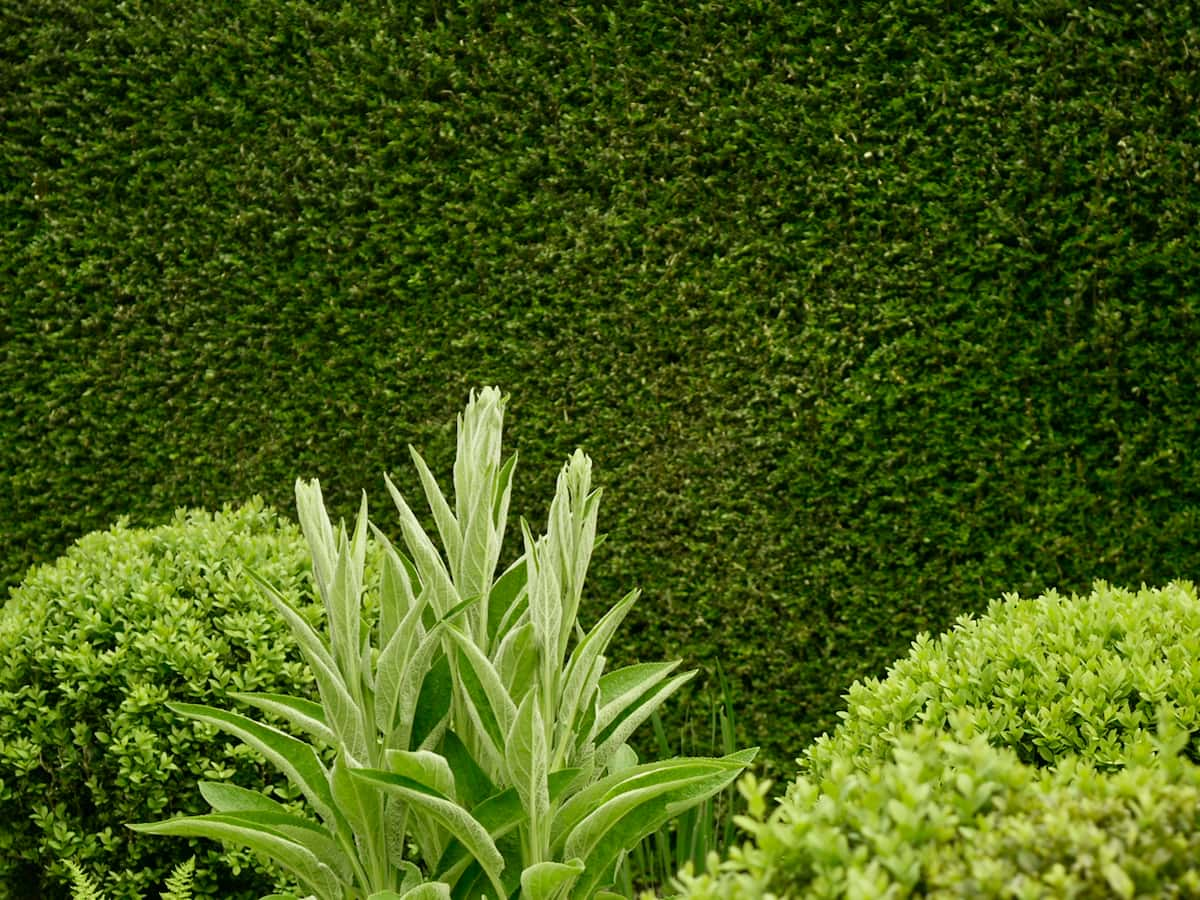
Silvery-white foxglove foliage (Digitalis purpurea alba) rises alongside domes of clipped box. In the background a crisp fine-leaved hedge of immaculately clipped Lonicera nitida sets off the foreground.
contrasting leaf sizes
Juxtaposing plants which have very different scales can produce dramatic results, as here, where the large, scalloped leaves of rhubarb (Rheum) rise out of a sea of fine-starry Sweet Woodruff (Galium odoratum).
Italian arum
Arum italic Pictum
Hart’s tongue fern
Asplenium scolopendrium
Great wood-rush
Luzula sylvatica
Texture and shape
Using a variety of leaf shapes can produce a wonderful tapestry of foliage patterns and textures, each plant helping show the others off by contrast. If the leaf shape of adjacent plants is too similar they can visually blend into one and lose their impact. If this happens, it is worth moving or removing one of them.
Ivy-leaved cyclamen
Cyclamen hederifolium
3
brilliant layout very helpful
Thanks! Glad you liked it :)